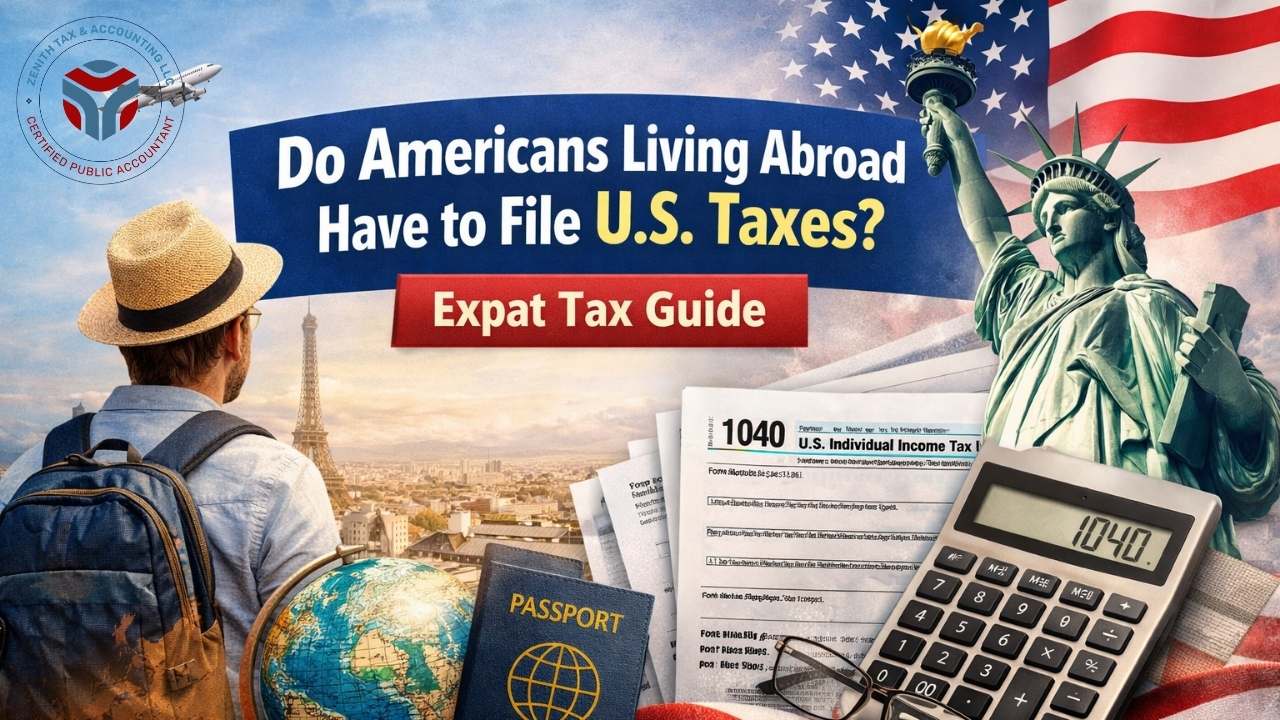
Many Americans believe that once they move overseas, they no longer have to worry about U.S. taxes. However, the United States is one of the few countries that taxes its citizens based on citizenship rather than residency. This means that even if you live and work in another country, you may still be required to file a U.S. tax return.
If you are an American living abroad, understanding your tax obligations is essential to avoid penalties and stay compliant with IRS regulations. This guide explains who must file, what income must be reported, and how expats can reduce their U.S. tax liability.
Do Americans Living Abroad Have to File U.S. Taxes?
Yes. Most U.S. citizens and Green Card holders living abroad must file U.S. taxes if their income exceeds certain thresholds.
The IRS requires Americans living overseas to report worldwide income, including:
- Foreign salary or wages
- Self-employment income
- Rental income
- Investment income
- Foreign pensions
- Business income
Even if you pay taxes in another country, you may still need to file a U.S. tax return each year.
Income Thresholds for U.S. Expats
The requirement to file depends on filing status and income level. For many single taxpayers under age 65, a tax return is required if income exceeds approximately $14,600 (amounts change annually).
Common filing situations include:
- Single expats
- Married filing jointly
- Self-employed Americans abroad
- Digital nomads and remote workers
If you earn income overseas, it is important to determine whether you must file a Form 1040 U.S. tax return.
Foreign Earned Income Exclusion (FEIE)
One of the most valuable tax benefits for Americans abroad is the Foreign Earned Income Exclusion (FEIE).
This provision allows eligible expats to exclude a portion of foreign-earned income from U.S. taxation.
Key points:
- Only applies to earned income
- Requires meeting the Physical Presence Test or Bona Fide Residence Test
- Must be claimed using Form 2555
This exclusion can significantly reduce or eliminate U.S. taxes for many Americans working overseas.
Foreign Tax Credit
If you pay income taxes in another country, you may qualify for the Foreign Tax Credit.
This credit allows you to offset U.S. taxes with taxes paid to a foreign government, helping prevent double taxation.
Many expats use both the Foreign Earned Income Exclusion and the Foreign Tax Credit as part of their tax strategy.
FBAR Reporting Requirements
Many Americans abroad must also report foreign bank accounts.
If the total value of your foreign financial accounts exceeds $10,000 at any time during the year, you may need to file an FBAR (Foreign Bank Account Report).
Accounts that may require reporting include:
- Foreign bank accounts
- Investment accounts
- Joint accounts
- Certain retirement accounts
Failing to file FBAR can result in significant penalties, so it is important to understand these requirements.
FATCA Reporting
In addition to FBAR, the Foreign Account Tax Compliance Act (FATCA) may require expats to report foreign financial assets using Form 8938.
This applies when foreign assets exceed certain thresholds depending on filing status and residence.
FATCA reporting helps the IRS track foreign financial holdings of U.S. taxpayers.
Tax Deadlines for Americans Living Abroad
U.S. expats receive an automatic two-month extension to file their tax return.
Key deadlines include:
- April 15 – Standard tax deadline
- June 15 – Automatic expat filing extension
- October 15 – Additional extension deadline (if requested)
Even with the extension, interest may still apply to unpaid taxes.
What Happens If You Don’t File U.S. Taxes While Living Abroad?
Many expats fall behind on tax filings without realizing the requirement still applies.
Failure to file may lead to:
- IRS penalties
- Interest on unpaid taxes
- Compliance issues with foreign financial accounts
Fortunately, the IRS offers streamlined filing procedures that allow eligible expats to catch up on past returns without severe penalties.
Why Many Expats Work With a U.S. Expat Tax CPA
U.S. expat taxes can become complicated due to international income reporting rules, foreign tax credits, and additional forms required for foreign assets.
Working with a U.S. expat tax CPA can help ensure:
- Accurate tax filings
- Compliance with FBAR and FATCA rules
- Proper use of tax exclusions and credits
- Reduced risk of IRS penalties
Professional guidance can make managing taxes while living abroad much easier.
Need Help Filing U.S. Taxes While Living Abroad?
If you are an American living overseas and need help understanding your tax obligations, professional guidance can help simplify the process.
Zenith Tax & Accounting LLC assists Americans worldwide with expat tax compliance, foreign income reporting, and IRS filing requirements. Call at +1 (772) 236-7536, Get expert help with your U.S. expat tax filing today.
Frequently Asked Questions (FAQs)
Do U.S. citizens have to file taxes if they live abroad?
Yes. U.S. citizens and Green Card holders generally must file U.S. tax returns if their income exceeds IRS filing thresholds, even if they live outside the United States.
Do Americans abroad pay taxes twice?
Not necessarily. Many expats avoid double taxation by using the Foreign Earned Income Exclusion or the Foreign Tax Credit.
What is the Foreign Earned Income Exclusion?
The Foreign Earned Income Exclusion allows eligible Americans living abroad to exclude a portion of their foreign-earned income from U.S. taxes.
What is FBAR and who must file it?
FBAR is a report required for U.S. taxpayers who have foreign financial accounts exceeding $10,000 during the year.
What happens if an expat hasn’t filed U.S. taxes for years?
Many Americans abroad can use IRS streamlined filing procedures to catch up on past tax returns and become compliant.