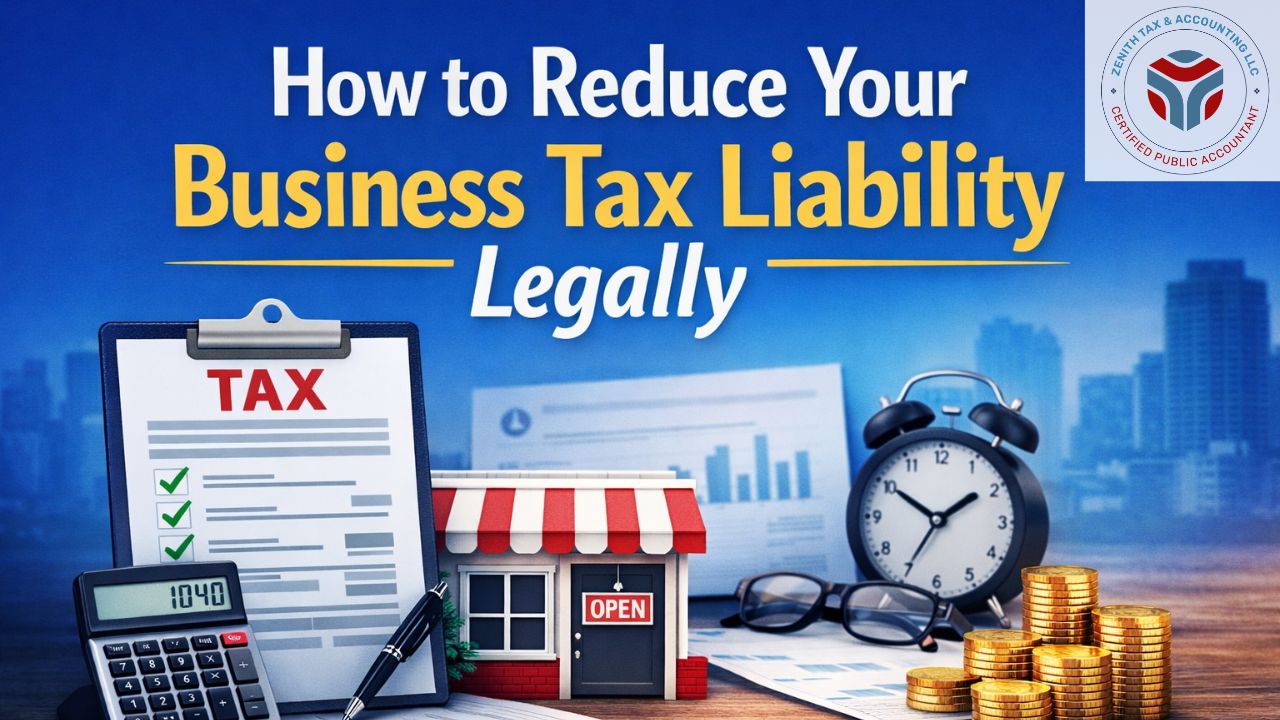
Running a business is rewarding but managing taxes can feel overwhelming. The good news? There are completely legal strategies that can significantly reduce your business tax liability when planned correctly.
We’ll break down practical, IRS-compliant ways to lower your tax burden while keeping your business protected.
1. Choose the Right Business Structure
Your entity type directly impacts how much tax you pay.
- LLC – Flexible taxation options
- S Corporation (S-Corp) – Potential self-employment tax savings
- C Corporation – Flat corporate tax rate but potential double taxation
Many small businesses overpay simply because their structure isn’t optimized. Reviewing your entity election annually can create significant tax savings.
2. Maximize Business Tax Deductions
One of the most effective ways to reduce taxable income is by claiming all legitimate business tax deductions.
Common deductible expenses include:
- Office rent or home office expenses
- Employee wages and contractor payments
- Business insurance
- Marketing and advertising
- Software and subscriptions
- Professional services (CPA, legal, consulting)
- Travel and vehicle expenses
Accurate bookkeeping ensures you don’t miss deductions that lower your taxable profit.
3. Take Advantage of Business Tax Credits
Unlike deductions, tax credits reduce your tax bill dollar-for-dollar.
Examples include:
- Work Opportunity Tax Credit
- Research & Development (R&D) Credit
- Energy-efficient equipment credits
- Employer-provided health insurance credit
Many businesses qualify for credits but never claim them.
4. Optimize Payroll and Owner Compensation
If you operate as an S-Corp, paying yourself a reasonable salary and taking the remaining profits as distributions may reduce self-employment taxes.
However, the IRS requires compensation to be “reasonable,” so proper planning is essential.
5. Contribute to Retirement Plans
Business owners can lower taxable income by contributing to:
- SEP IRA
- Solo 401(k)
- SIMPLE IRA
Retirement contributions reduce current taxable income while helping you build long-term wealth.
6. Deduct Health Insurance Premiums
Self-employed individuals can often deduct 100% of health insurance premiums for themselves, their spouse, and dependents.
This deduction directly lowers adjusted gross income.
7. Use Section 179 and Bonus Depreciation
Purchasing equipment, machinery, or qualifying software may allow you to deduct the full cost in the same year instead of depreciating it over time.
Strategic equipment purchases before year-end can reduce taxable income significantly.
8. Track Vehicle and Mileage Properly
If you use a vehicle for business, you may deduct:
- Standard mileage rate
- Actual vehicle expenses
Proper documentation is critical to defend deductions in case of an audit.
9. Plan Estimated Tax Payments Carefully
Underpaying estimated taxes can result in penalties. Overpaying means tying up cash unnecessarily.
A tax projection mid-year helps ensure you pay the right amount — not too much and not too little.
10. Work With a Tax Professional for Strategic Planning
Tax preparation and tax planning are not the same.
Tax preparation reports what already happened.
Tax planning helps you legally reduce liability before year-end.
A proactive CPA can help you:
- Project taxable income
- Adjust deductions strategically
- Optimize entity structure
- Implement advanced tax-saving strategies
Why Strategic Tax Planning Matters
Reducing your business tax liability legally requires:
- Accurate bookkeeping
- Understanding IRS regulations
- Year-round planning
- Proper documentation
When done correctly, these strategies can save thousands of dollars annually while keeping your business compliant.
Final Thoughts
You don’t have to overpay in taxes to stay compliant. With the right business tax strategies, you can reduce taxable income, claim eligible deductions, utilize credits, and structure your compensation efficiently.
Proactive planning is the key to legal tax savings.
Need Help Reducing Your Business Taxes?
At Zenith Tax & Accounting LLC, we specialize in business tax preparation and proactive tax planning strategies that help business owners legally reduce tax liability.
Whether you operate as an LLC, S-Corp, or Corporation, we’ll create a customized strategy designed for your business. Visit Contact page to schedule your consultation today.
Frequently Asked Questions (FAQs)
1. What is the fastest way to reduce business tax liability?
The fastest way is to maximize deductions and ensure your entity structure is optimized. However, strategic tax planning provides the most sustainable long-term savings.
Are business tax deductions audited frequently?
Deductions are not automatically audited, but improper documentation increases audit risk. Accurate records are essential.
Is forming an S-Corp always better for taxes?
Not always. S-Corps can reduce self-employment taxes in certain income ranges, but suitability depends on profit level and compensation structure.
Can I deduct my home office?
Yes, if it meets IRS exclusive and regular use requirements.
When should I start tax planning?
Tax planning should start at the beginning of the year — not during tax season.