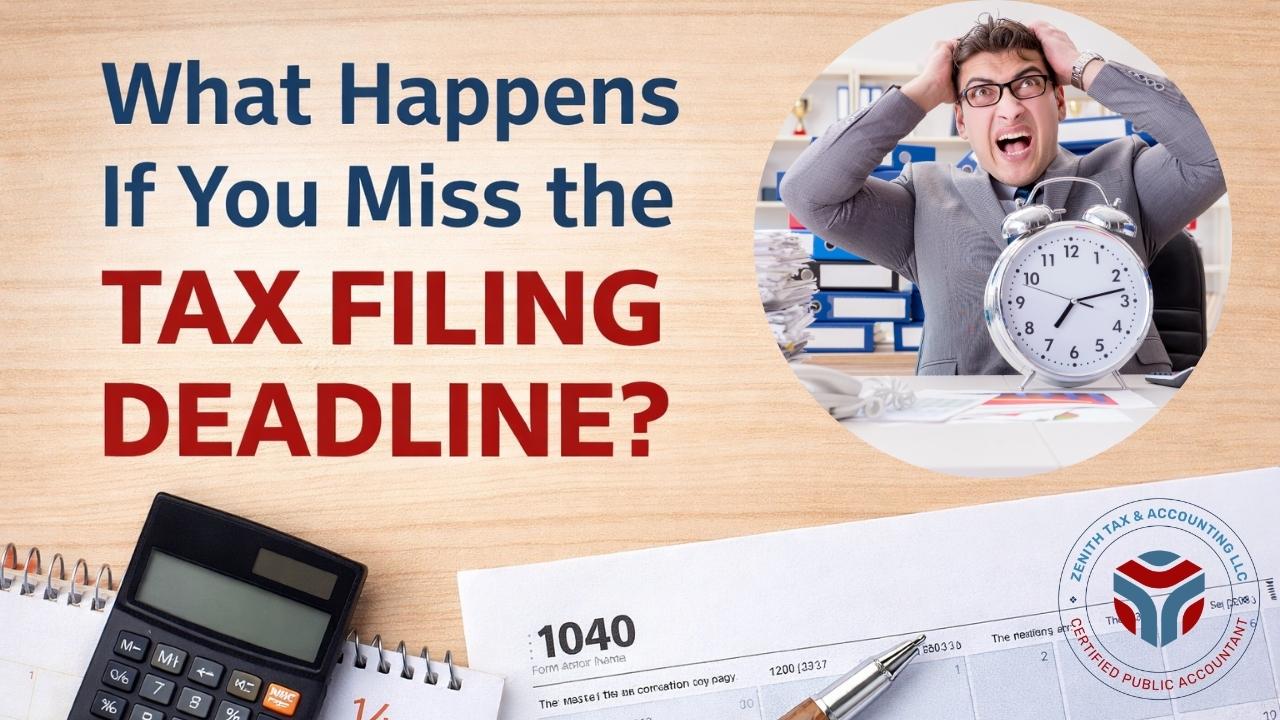
Missing the tax filing deadline can be stressful for individuals and business owners. However, understanding the consequences and the steps you can take afterward can help you reduce penalties and resolve the issue quickly. Many taxpayers miss deadlines every year, but acting fast can prevent bigger problems such as additional penalties, interest, or enforcement actions from the Internal Revenue Service (IRS).
We explain what happens if you miss the tax filing deadline, the penalties involved, and how to fix the situation.
Tax Filing Deadlines You Should Know
The standard tax filing deadline for most individuals in the United States is April 15. However, if the date falls on a weekend or holiday, it may shift slightly. Businesses and self-employed individuals may also have different deadlines depending on their entity type.
Common deadlines include:
- Individual tax returns (Form 1040)
- Partnerships and S-Corporations
- Corporations
- Estimated quarterly tax payments
If you miss the filing deadline, penalties and interest may begin accumulating immediately.
What Happens If You Miss the Tax Deadline?
Missing the tax filing deadline does not mean the situation is irreversible, but there are several consequences you should be aware of.
1. Failure-to-File Penalty
One of the most common penalties imposed by the Internal Revenue Service (IRS) is the failure-to-file penalty.
- Typically 5% of the unpaid taxes per month
- Maximum penalty can reach 25% of the unpaid tax
This penalty increases the longer you delay filing your return.
2. Failure-to-Pay Penalty
If you also owe taxes and fail to pay them by the deadline, you may face an additional penalty.
- Usually 0.5% of the unpaid tax per month
- Can also accumulate up to 25%
Even if you cannot pay the full amount owed, filing your tax return on time can help reduce this penalty.
3. Interest on Unpaid Taxes
In addition to penalties, interest will accrue on unpaid tax balances. Interest continues accumulating until the balance is fully paid.
The Internal Revenue Service (IRS) adjusts the interest rate quarterly, and it compounds daily.
4. Loss of Tax Refund
If you are owed a refund, there is generally no penalty for filing late. However, you must file your return within three years to claim your refund. After that period, the government may keep the refund permanently.
5. Possible IRS Notices and Collection Actions
If tax returns remain unfiled or taxes remain unpaid for an extended period, the Internal Revenue Service (IRS) may send notices or initiate collection actions such as:
- Payment demands
- Tax liens
- Wage garnishments
- Bank levies
Addressing the issue early helps prevent these situations.
What To Do If You Missed the Tax Deadline
If you missed the deadline, taking action quickly is the best way to reduce penalties.
1. File Your Tax Return as Soon as Possible
Even if you cannot pay the full balance, filing your return quickly will stop the failure-to-file penalty from increasing.
2. Pay What You Can
Partial payments help reduce penalties and interest. The sooner you make payments, the lower your overall tax liability may be.
3. Request an IRS Payment Plan
The Internal Revenue Service (IRS) offers payment plans that allow taxpayers to pay their balance over time.
Common options include:
- Short-term payment plans
- Long-term installment agreements
- Offer in compromise (in some cases)
4. Apply for Penalty Relief
Some taxpayers may qualify for IRS penalty relief through programs such as:
- First-time penalty abatement
- Reasonable cause relief
Working with a tax professional can help determine eligibility.
5. Consider Filing for an Extension in the Future
Taxpayers can request an extension that provides six additional months to file their tax return. However, the extension only applies to filing the return, not paying taxes owed.
How to Avoid Missing Future Tax Deadlines
Avoiding late filing can help protect your finances and keep you compliant with tax laws.
Helpful strategies include:
- Maintain organized financial records
- Track tax deadlines throughout the year
- Set reminders for estimated tax payments
- Work with a professional tax advisor
- Start preparing documents early
Proper tax planning can help individuals and businesses avoid unnecessary penalties.
Why Professional Tax Help Matters
Many taxpayers miss deadlines due to complicated financial situations, lack of documentation, or confusion about tax laws. Working with experienced professionals can help you stay compliant and identify tax-saving opportunities.
A qualified CPA can help you:
- File late tax returns correctly
- Reduce IRS penalties
- Develop a tax strategy
- Stay compliant with federal tax regulations
Need Help Filing Late Taxes?
If you missed the tax filing deadline, professional guidance can help you minimize penalties and resolve tax issues quickly.
Zenith Tax & Accounting LLC assists individuals and business owners with tax filing, tax planning, and IRS resolution services. Schedule your tax consultation today at +1 (772) 236-7536.
Frequently Asked Questions (FAQs)
Is there a penalty if I file taxes late but don’t owe money?
Generally, there is no penalty if you file late and are due a refund. However, you must file within three years to claim the refund.
How long do I have to file late taxes?
You typically have three years from the original filing deadline to submit a return and claim any refund owed.
What happens if I don’t file taxes for several years?
If multiple tax returns remain unfiled, the Internal Revenue Service may file a substitute return on your behalf, which usually results in a higher tax bill because deductions and credits are not included.
Can I set up a payment plan with the IRS?
Yes. The Internal Revenue Service offers installment agreements that allow taxpayers to pay their tax debt over time.
Can penalties be removed?
In some cases, penalties may be reduced or removed through penalty abatement programs, especially for first-time offenders or taxpayers with valid reasons for late filing.